

Exploring the Diverse World of Cryogenic Storage Tanks
Exploring the Diverse World of Cryogenic Storage Tanks: Types, Applications, and Considerations
Cryogenic storage tanks are indispensable components in a multitude of industries, playing a critical role in the safe and efficient containment and transportation of liquefied gases at extremely low temperatures. These specialized vessels are engineered to handle substances existing in their cryogenic state, which is defined as a temperature below -150 degrees Celsius (-238 degrees Fahrenheit). At these frigid temperatures, substances normally found as gases (like nitrogen, oxygen, and LNG) transform into liquids, significantly reducing their volume and making them more manageable for storage and transport. The sheer diversity of cryogenic storage tanks available reflects the varied applications and specific requirements dictated by the type of liquefied gas being stored. Let's delve into the common types of cryogenic storage tanks, highlighting their unique characteristics and applications:
1. Stationary Cryogenic Tanks: The Workhorses of Large-Scale Storage
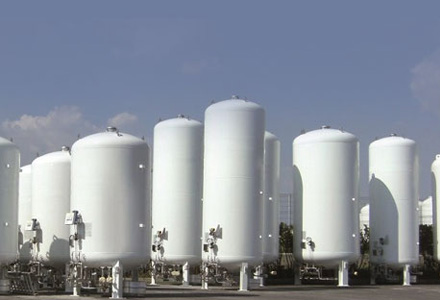
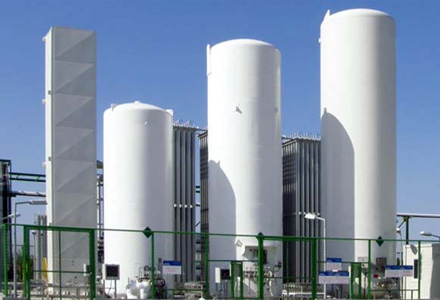
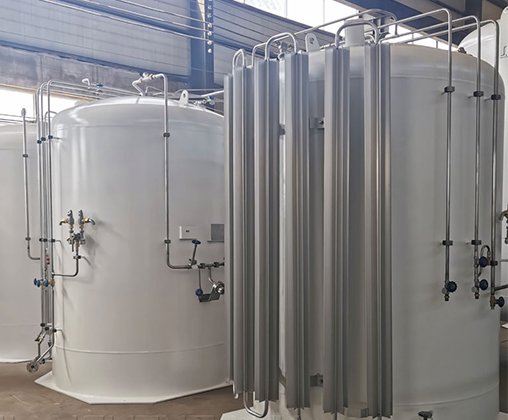
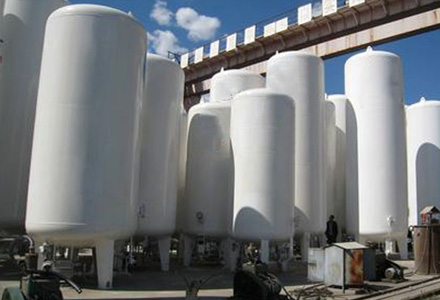
Stationary cryogenic tanks are designed for permanent or semi-permanent installations, typically found at industrial facilities, research institutions, and distribution centers. They provide substantial storage capacity for a variety of cryogenic liquids.
Double-Walled Vacuum Insulated Tanks: Maximizing Thermal Efficiency: These are arguably the most prevalent type of stationary cryogenic tank. Their design centers around minimizing heat transfer from the ambient environment, preventing the precious liquefied gas from vaporizing – a process that is not only wasteful but also can create pressure build-up within the tank. The double-walled construction consists of an inner vessel that directly contains the cryogenic liquid and an outer vessel. The crucial element is the space between these two vessels, which is evacuated to create a high vacuum. This vacuum acts as an exceptionally effective insulator, dramatically reducing heat transfer by conduction and convection. Further, multi-layer insulation (MLI) is often incorporated into the vacuum space, consisting of alternating layers of reflective material (like aluminum foil) and a low-conductivity spacer. This MLI reflects radiant heat, further boosting insulation performance. These tanks are commonly employed for the long-term storage of liquid nitrogen, liquid oxygen, liquid argon, and other frequently used cryogenic gases. Manufacturers often tailor the tank's design (size, pressure rating, insulation thickness) to meet specific client needs.
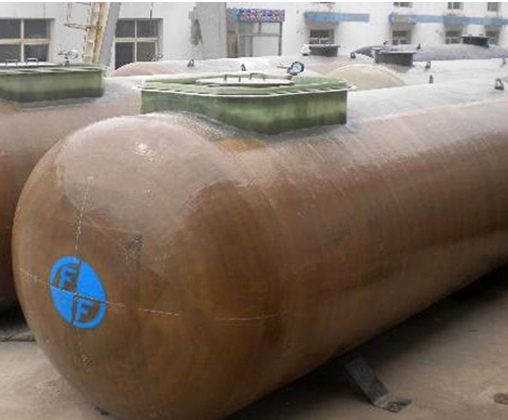
Single Containment Tanks: Cost-Effective Solutions for Specific Applications: In contrast to their double-walled counterparts, single containment tanks feature a single vessel to hold the cryogenic liquid. While they don't offer the same level of thermal insulation, they are generally more cost-effective and suitable for applications where minimal boil-off rates are not paramount or where the stored liquid is less volatile. They might be used for the temporary storage of cryogenic liquids in certain industrial processes or for smaller-scale storage needs. It's crucial to note that single containment tanks often require additional external insulation to reduce vaporization.
2. Mobile Cryogenic Tanks: Taking Cryogenics on the Move
Mobile cryogenic tanks are designed for the transportation of cryogenic liquids, allowing for the delivery of these essential materials to various end-users. Their portability and robust construction are key features.
Cryogenic Liquid Cylinders: The Versatile Workhorse of the Industry: These are the smaller, more easily handled cousins of the larger tanks. Cryogenic liquid cylinders are portable tanks engineered for storing and transporting relatively small quantities of cryogenic liquids. They are constructed with double walls and high-efficiency insulation. They're a ubiquitous sight in medical facilities (for liquid nitrogen used in cryosurgery or storing biological samples), laboratories (for research and experimentation), and various industrial settings (for processes requiring cryogenic temperatures). Their cylindrical shape facilitates easy handling and maneuverability. These cylinders are typically equipped with safety features such as pressure relief valves and burst discs.
ISO Containers: Global Logistics for Cryogenic Liquids: Leveraging the standardized dimensions of ISO containers, specialized cryogenic ISO containers are designed for the bulk transport of liquefied gases across significant distances. They are essentially large, well-insulated tanks mounted within the framework of a standard ISO container. This allows for seamless intermodal transportation, meaning they can be easily moved by road, rail, or sea without the need to transfer the liquid. This versatility makes them ideal for global supply chains, enabling the efficient delivery of liquefied gases to various regions. Insulation on ISO containers are often enhanced with vacuum and multilayer insulation.
3. Specialized Cryogenic Tanks: Tailored Solutions for Specific Applications
Beyond the general categories, certain cryogenic tanks are specifically engineered to handle the unique challenges associated with storing particular liquefied gases or supporting specific technologies.
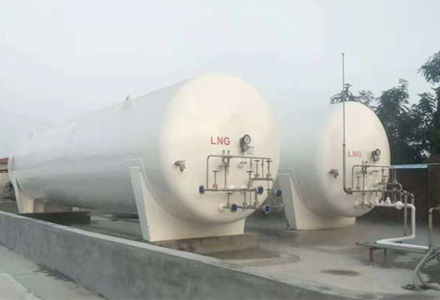
LNG (Liquefied Natural Gas) Storage Tanks: Powering the Future: LNG storage tanks are arguably the largest and most complex cryogenic storage vessels. They are designed specifically for the storage of liquefied natural gas (LNG) at its extremely low boiling point (approximately -162°C or -260°F). These tanks are crucial components of the LNG supply chain, allowing for the storage of vast quantities of natural gas in a compact form, facilitating transportation by sea (LNG carriers) and subsequent regasification and distribution. LNG tanks often feature multiple layers of insulation and sophisticated monitoring systems to ensure safe and efficient operation. The most common type is a full containment tank, which is designed to contain the entire contents of the tank in the event of a leak.
Liquid Hydrogen Storage Tanks: Embracing the Hydrogen Economy: With the growing global focus on hydrogen as a clean and sustainable energy carrier, specialized cryogenic storage tanks for liquid hydrogen (LH2) are gaining prominence. Storing hydrogen in its liquid form presents significant challenges due to its extremely low boiling point (approximately -253°C or -423°F) and its small molecular size, which makes it prone to leakage. These tanks require exceptionally high levels of insulation and specialized materials to minimize boil-off and maintain the integrity of the stored hydrogen.
Carbon Capture and Storage (CCS) Tanks: A Vital Component of Climate Change Mitigation: Cryogenic technology is also being deployed in carbon capture and storage (CCS) initiatives. In these applications, gases like carbon dioxide (CO2) are captured from industrial sources or directly from the atmosphere and then liquefied through cryogenic processes for long-term storage. The specialized tanks used in CCS are designed to handle the specific requirements of storing liquefied CO2, including its pressure and temperature characteristics. These tanks play a crucial role in reducing greenhouse gas emissions and mitigating the effects of climate change.
4. Spherical Cryogenic Tanks: Strength in Geometry
Spherical tanks: In certain applications, spherical cryogenic tanks are preferred due to their structural advantages. Spherical tanks distribute stress more evenly, making them suitable for withstanding high internal pressure. They are often used for storing large quantities of liquefied gases in refineries and industrial facilities.
5. Cryogenic Tank Materials: Key to Performance and Durability
The choice of materials for cryogenic tanks is critical to ensure their structural integrity and performance at extremely low temperatures.
Stainless Steel Tanks: The Industry Standard: Stainless steel is a widely favored material for cryogenic tanks due to its excellent corrosion resistance, high strength, and ability to maintain its mechanical properties at cryogenic temperatures. Austenitic stainless steels, such as 304 and 316, are particularly well-suited for cryogenic applications. Tanks used for storing oxygen often employ stainless steel construction due to its compatibility with oxygen-rich environments.
Aluminum Tanks: A Lightweight Alternative: Aluminum offers a lighter-weight alternative to stainless steel for cryogenic tanks. While it may not be as universally applicable as stainless steel, aluminum tanks find use in specific applications where weight is a critical factor, such as in mobile cryogenic liquid cylinders or in aerospace applications. Aluminum alloys designed for cryogenic service also offer good corrosion resistance.
Conclusion:
Cryogenic storage tanks are available in a wide array of types and designs to cater to the diverse needs of storing and transporting liquefied gases at extremely low temperatures. The selection of the appropriate tank depends on a multitude of factors, including the type of cryogenic substance being stored, the required storage capacity, the intended mode of transportation (if any), and the specific application, be it industrial, medical, energy-related, or scientific. As technology advances and the demand for cryogenic liquids continues to grow, we can expect further innovations in tank design, materials, and insulation techniques to enhance the efficiency, safety, and reliability of cryogenic storage systems.
For further information on selecting the right cryogenic storage tank for your specific requirements, please do not hesitate to contact us. Our team of experts is available to provide guidance and support.



Comments